How young people feel about the future
Young people want more sustainable futures, and to be involved in building them.
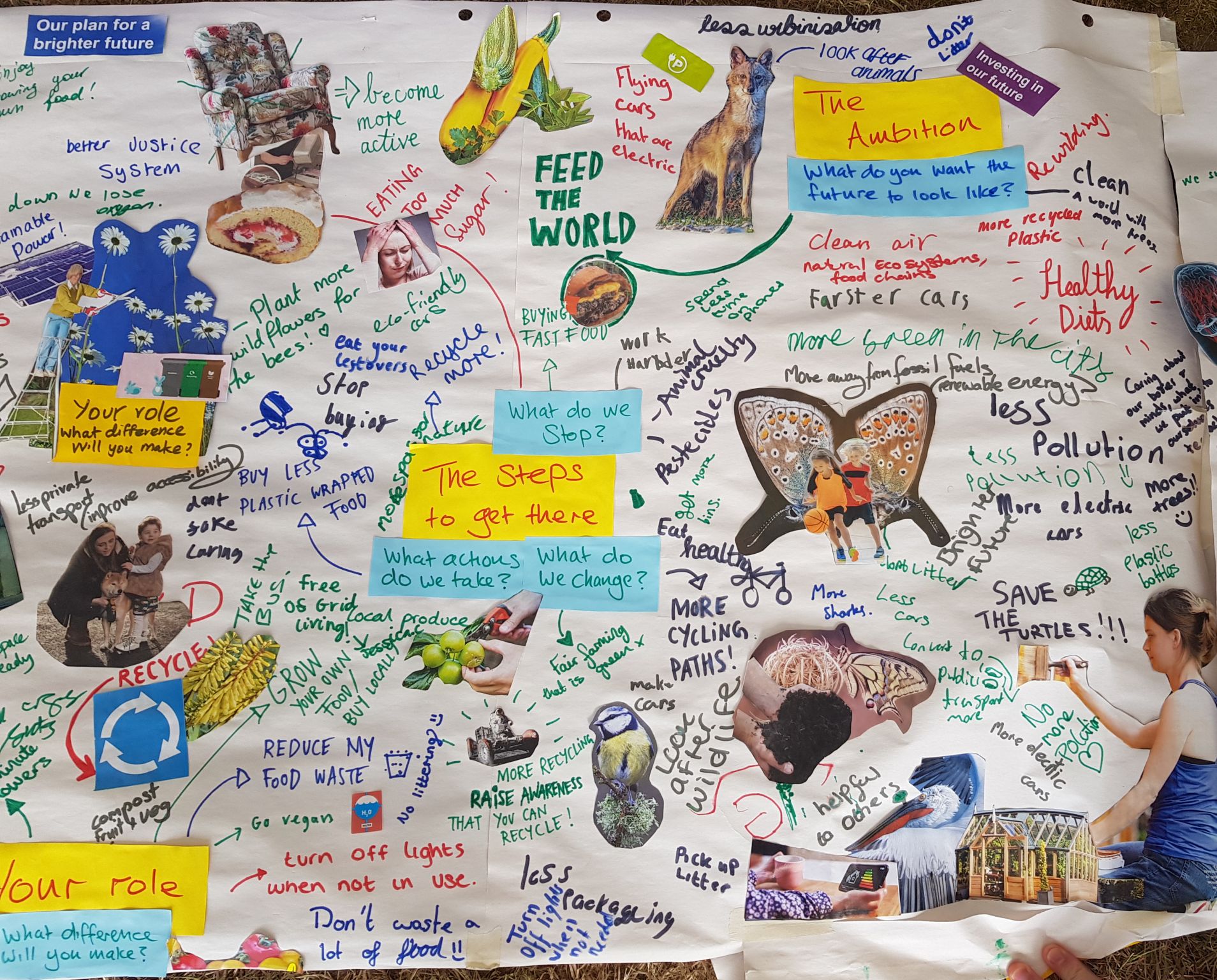
We’re just back from the Royal Norfolk Show where we spent two days asking young people1 how they feel about the future:
We asked every visitor to our stall:
- What they want to see in the future
- What we need to do to achieve that
We found:
The mainstream view for young people was for more sustainable futures. We had no censorship on what people shared - which is why you can find the odd and fa(r)ster/flying cars. This openness was important and we didn’t hide these comments. Participants knew they could write anything and still sustainability was the dominant theme. Even the flying car suggestion was qualified as electric.
The above nods to a societal mindset shift from previous decades. A few adults noticed this and commented how environmental views used to be more niche in the past. Being able to see these collected voices, helped participants understand wider consensus, and how it’s changing.
The natural world was the main topic of interest. Sustainability is a broad area but the majority focused on green spaces, biodiversity and animal welfare. It seems nature is a key channel to encourage sustainability conversations with young people. It does however suggest we need awareness-building for broader sustainability matters.
Buzzwords and sound bites came up a lot (e.g. shop local, save the bees, sustainable power, etc.). The challenge is that these phrases signalled greater understanding, but this wasn’t always the reality. Some struggled to expand more on what, why or how they wanted these things. While it’s great to see this appetite, we need to build deeper understanding of sustainability challenges and solutions.
Schools were an impressive driver of sustainability awareness. Participants shared examples of school activities to improve biodiversity, reduce waste and build sustainability awareness. School teachers also spoke of working with others schools to combine efforts. Children exposed to these projects could cite numerous sustainability activities as a result. This points to the importance of supporting schools for sustainability awareness.
We met only two sceptics, both of whom I’d place over 50 years of age. One rejected climate change on grounds of their Christianity. Their concern was that scientific evidence would be used to control their actions. The other sceptic worried sustainability initiatives threaten food production - which they felt is the primary global concern. Their described themselves as an agricultural engineer. No young person seemed sceptical of climate change or the need for sustainability.
Lots more to think on. For now though, huge thanks to Samantha Fox and all the rest of the STEMM village. We had a great time! Thanks to Dr. Selina Bruns, Manasa Sharma, Azam Lashkari, Anusha Jegathesan and Fengling Jia for all their support.
-
Generally below 18, with many around 10-14. ↩