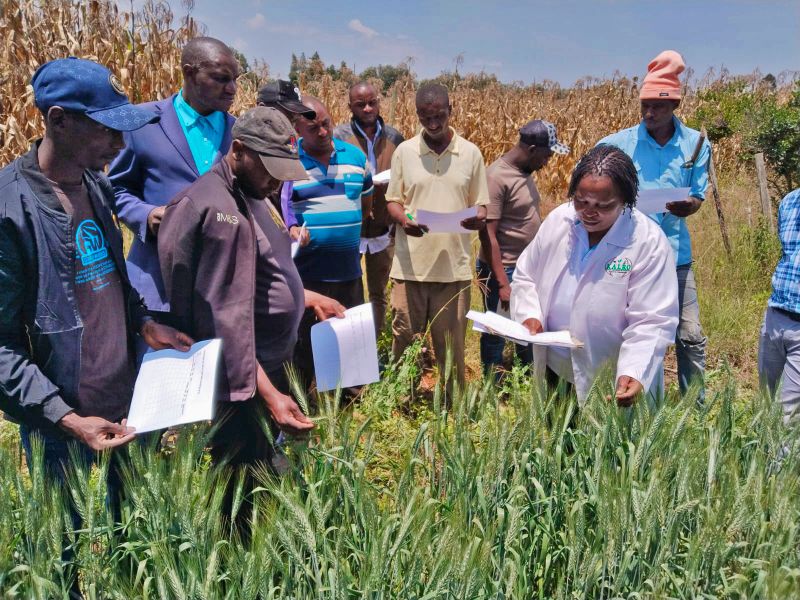
Wheat participatory breeding in Kenya
Working with diverse farmers to indentify local needs.
It was great to see our participatory research in Laikipia, Kenya, learning how farmers’ crop selection compares to breeder’s choices, and how gender affects trait preferences. Why is this important?
Wheat is a staple in Kenya, and consumption is increasing (particularly in urban areas). But Kenyan wheat production is under pressure from fungal rust diseases, and the wheat crops could generally be made more nutritious.
Through the UK-CGIAR wheat project, we’re developing rust-resistant varieties, with far higher iron levels - which means more resilient and nutritious flour supply to improve national resilience and nutritional security
Why iron? Well, many across Kenya struggle with iron deficiency and wheat is the second highest source of iron intake in Kenya. Raising iron in Kenyan wheat could therefore lead to widespread iron intake, without the need for consumer behavioural change.
But it takes more than higher nutrient levels to convince farmers to grow a variety - we’re working with men and women farmers to understand what other traits they want improved in wheat varieties, to bundle these with rust resistance and high iron content. Understanding how these preferred traits differ by factors such as gender and farm size means we can set inclusive, gender-responsive breeding targets to support diverse farmers.
As local researcher Anne Gichangi PhD, Kenya Agricultural and Livestock Research Organization (KALRO) said:
“What I found most exciting about this work was seeing farmers take such an active role in shaping the future of wheat in Kenya. Their evaluations and discussions reflected deep local knowledge and practical insight. Bringing farmers’ voices directly into the breeding process ensures that the wheat varieties developed are not only high-yielding but also truly suited to their farming systems, preferences, and livelihoods.”
Here’s a video with Anne speaking more about the UK-CGIAR wheat research in Kenya.
Great working on this UK-CGIAR project in Kenya with James Karanja and Godwin Macharia from KALRO and Nitya Rao and Christopher Darby of Norwich Institute for Sustainable Development.
Fantastic to see this collaboration of natural sciences from International Center for Agricultural Research in the Dry Areas (ICARDA), John Innes Centre and CIMMYT working with social science. Thank you to JIC Director Cristóbal Uauy especially here for building so many of these transdisciplinary bridges.
The UK-CGIAR Centre is managed by CABI and funded by Foreign, Commonwealth and Development Office - Research, Science and Technology.