We eat a tiny selection of crops
Increasing this diversity brings many potential benefits.
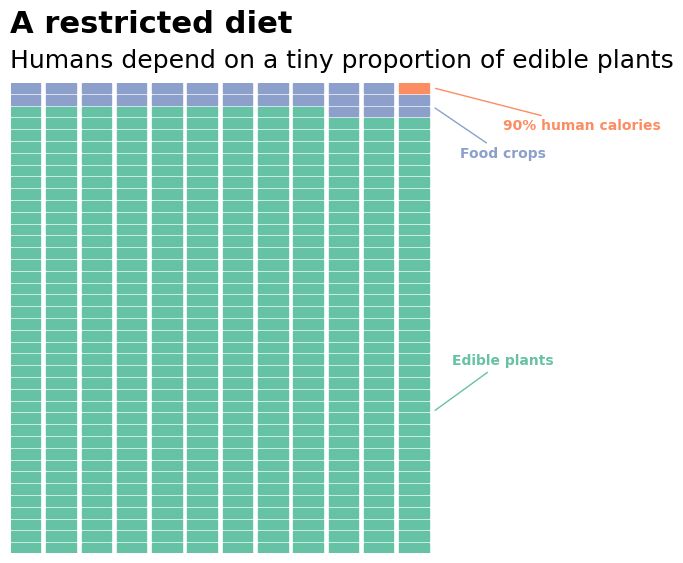
We depend on a narrow selection of crops and this brings multiple risks. Here’s some paths to fix this to benefit people and the planet.
Globally, we rely on 6 crops - with only 3 providing around 51% of calories1 This set-up has provided calories to feed populations, but it has come with some challenges2
Relying on so few crops is risky - our eggs are all in one basket. Look at the global food insecurity outbreaks due to Ukraine wheat shortages over last year. Climate change will bring further pressures to how and where these main crops grow.
And our main crops aren’t even that nutritious. Raw calories are important, but diets are now the major cause of ill-health in the world.3 There are better options. We need to diversify
We need nutritionally diverse food systems that regenerate habitats and raise the resilience of communities to climate change pressures. Diversifying can benefit nutritional status, agrobiodiversity, climate resilience and cultural heritage.
The good news is that we can do this. There are many ‘neglected’ crops that have enormous potential and are well adapted to local growing pressures. What’s more, these crops tend to be accessible to the vulnerable in local communities.

Here’s some key steps:
🌱 We need to capture and conserve the wealth of crop diversity and make these repositories accessible for actors to use. Crop Trust are doing great things here and the new BOLDER project is an exciting next step.
🔬 Modern bioscience has a role to further improve neglected crops. A nice example is provitamin A sweet potato with International Potato Center (CIP). Bio-fortified legumes, or cereals like millets, offer more exciting options.
👩🌾 We must support farmers in accessing useful crops and this cannot be achieved by formal seed systems alone. Integrated seed systems, such as ISSD Africa, are vital to proliferate nutrition-focused improved varieties.
👨🍳 We need to understand and build demand for more nutritious crops. SmartFood by ICRISAT used some really great ways to use food research to guide recipe schools which helped consumers get tasty and nutritious meals from a range of locally available crops[3]. I saw farmers with ISSD Plus Uganda doing similar things for sweet potato.
And all of these areas need to be integrated. Together we can create more equitable, resilient and sustainable food systems.
-
Shakuntala Thilsted in The Telegraph ↩
-
Szymon Lara of Royal Botanic Gardens, Kew speaking to Food-Navigator ↩